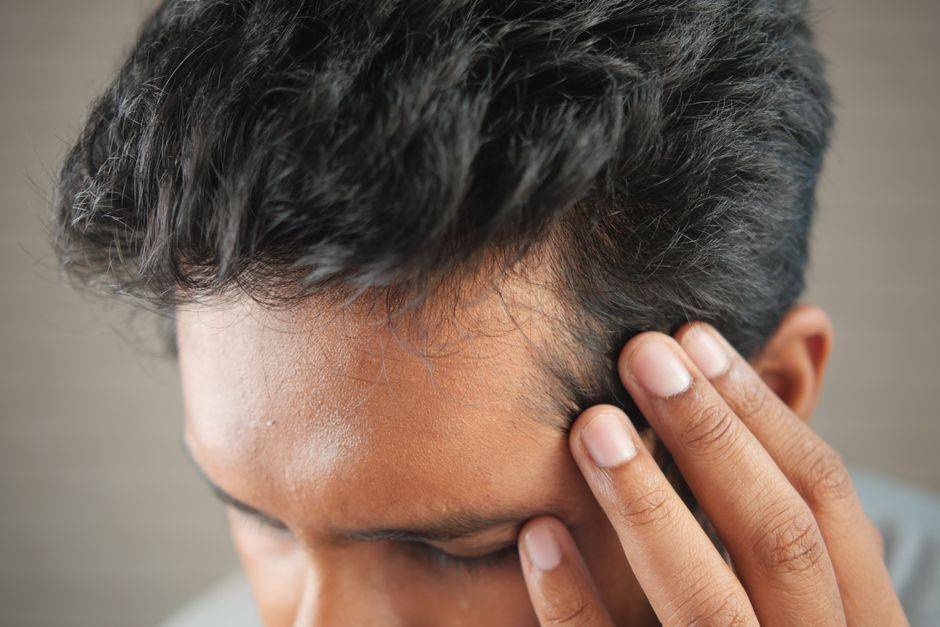
Yes, low testosterone can contribute to hair loss, but the mechanism is usually indirect. Low testosterone causes shedding through stress and hormonal imbalance, while dihydrotestosterone (DHT), a testosterone byproduct, drives the permanent pattern baldness most people fear. Testosterone itself is not the villain. DHT and genetics are, and that distinction determines whether your hair loss is reversible.
Table of Contents
What does low testosterone hair loss actually look like?
Low testosterone hair loss typically appears as diffuse, non-patterned shedding rather than a receding hairline or bald spot. You may notice reduced density, slower growth, and weaker strands overall. The hair looks thinner everywhere, not just at the temples or crown.
According to Urology Specialists NC, low testosterone can cause hair loss on the head, arms, legs, and facial hair. That body-wide thinning is a key clue. Androgenic alopecia, by contrast, follows a recognizable pattern at the temples and crown and is permanent.
Low testosterone can also trigger telogen effluvium. LaFue Hair NYC explains that low testosterone may cause health complications that stress the body and push hair into the shedding phase. The result is excessive shedding from the scalp that can look alarming but is often temporary once the underlying stress resolves.
What are the signs of low testosterone in men?
The classic signs of low testosterone in men include persistent fatigue, low libido, weight gain, and mood changes. According to Arlington Family Practice, low testosterone is linked with causing and worsening depression, anxiety, and irritability. These mood shifts are not just in your head; they are hormonal.
Sexual function is another major signal. Testosterone signals the brain to produce nitric oxide, the molecule that helps trigger an erection, according to Urology Specialists NC. When testosterone drops, that signaling weakens, and erectile function can suffer.
Prevalence matters here. Low testosterone affects two out of 10 men over the age of 60, according to Urology Specialists NC. Levels can also decline somewhat after age 30, per Arlington Family Practice. You do not need to be elderly to experience symptoms.
Is hair loss from low testosterone reversible?
It depends. Some testosterone-related hair loss may be reversible depending on the cause, but male pattern hair loss is permanent. LaFue Hair NYC states this distinction directly. The reversibility question hinges entirely on what is driving the loss.
If the cause is telogen effluvium from hormonal stress, restoring healthy testosterone levels can allow hair to recover. The follicle is not permanently damaged in that scenario. It has simply been pushed into a resting phase, and it can re-enter the growth phase once the body stabilizes.
If the cause is DHT-driven follicle shrinkage, regrowth requires treatment. The follicle will not bounce back on its own. According to TRTed, two approved treatments for androgenic alopecia work by increasing blood flow to hair follicles and stopping testosterone’s conversion to DHT. Those interventions target the mechanism directly.
How does testosterone cause hair loss if it is not the direct culprit?
Testosterone itself does not directly cause androgenic alopecia. Its byproduct does. Testosterone converts into dihydrotestosterone (DHT), which binds to hair follicles and gradually shrinks them. LaFue Hair NYC identifies DHT as the primary driver of male pattern baldness.
The mechanism is specific. DHT erodes the fat tissue around the hair follicle, which ordinarily protects it by acting as a cushion and keeping hair hydrated, according to TRTed. When that protective tissue degrades, the follicle shrinks and becomes non-productive.
Genetics determine who loses hair. An increase in DHT will only cause hair loss in people who are genetically predisposed to be more sensitive to it, per TRTed. Not all hair follicles are sensitive to DHT either. That is why loss stays localized to the scalp while body and facial hair may continue thriving.
Can low testosterone cause hair loss in women too?
Yes, low testosterone can cause hair loss in women, though it presents differently than in men. According to Birch Grove Mental Health, hair loss in women is common, and by midlife a significant percentage experience some degree of thinning linked to hormonal changes.
Low testosterone in women leads to reduced hair density and slower growth. The hair appears generally weaker or less full over time rather than in a specific pattern, per Birch Grove Mental Health. That diffuse thinning is the hallmark.
High testosterone can also cause hair loss in women, particularly female pattern hair loss. Elevated testosterone in women is often linked to polycystic ovary syndrome (PCOS), insulin resistance, and adrenal imbalances, according to Birch Grove Mental Health. High testosterone combined with lower estrogen can accelerate thinning, and metabolic factors like insulin resistance can increase androgen activity and worsen symptoms.
How do I fix low testosterone and protect my hair?
The first step is testing. You cannot fix what you have not measured, and guessing wastes months of hair. Bloodwork reveals whether your testosterone is actually low, whether DHT is elevated, and whether estrogen balance is off. Without that data, any treatment decision is a shot in the dark.
Treatment depends on the cause. Restoring low levels may resolve shedding if the loss is stress-driven. DHT-driven loss needs a plan that addresses conversion. Testosterone.Doctor offers hormone level testing, personalized treatment plans, injectable testosterones including cypionate, enanthate, and propionate, and online consultations and prescriptions.
Treatment protocols vary. Intramuscular testosterone injections are typically administered around every two weeks depending on the diagnosis, according to Urology Specialists NC. A personalized plan matters because your dosing schedule and formulation should match your specific hormone profile, not a generic template.
When should you get your testosterone levels tested?
Symptoms are the trigger. Fatigue, low libido, weight gain, and unexplained shedding together justify testing. You do not need all of them. A combination of two or three persistent symptoms is enough reason to get bloodwork done.
Age is a factor but not a gatekeeper. Low testosterone affects two out of 10 men over 60, according to Urology Specialists NC, and levels can start declining after age 30, per Arlington Family Practice. Younger men experience low testosterone too.
Hair loss has multiple causes, and self-diagnosing from a mirror is a losing game. Bloodwork is the only way to know whether your thinning is hormonal, genetic, or stress-driven. Comprehensive testing should look at the full hormonal picture, not just total testosterone. DHT and estrogen balance affect hair as well, according to Birch Grove Mental Health.
Key Takeaways
-
Low testosterone can cause hair loss, but it typically shows up as diffuse shedding and reduced density rather than classic pattern baldness.
-
Testosterone itself does not directly cause androgenic alopecia; its byproduct DHT does, and only in people genetically sensitive to it.
-
Male pattern hair loss is permanent, while some testosterone-related shedding may be reversible depending on the underlying cause.
-
Low testosterone affects two out of 10 men over 60, and levels can begin declining after age 30.
-
In women, both low and high testosterone can drive thinning, with high levels often linked to PCOS and insulin resistance.
-
The two approved treatments for androgenic alopecia work by increasing blood flow to follicles and blocking testosterone’s conversion to DHT.
-
Testing is the non-negotiable first step; treatment depends entirely on whether your loss is hormonal, genetic, or stress-driven.
References
-
9 Signs of Low Testosterone In Men — Urology Specialists NC, published 2019-10-16
-
6 Signs You May be Suffering From Low Testosterone — Arlington Family Practice
-
Testosterone’s Effect on Hair Loss — LaFue Hair NYC, published 2024-06-13
-
Does Low Testosterone Cause Hair Loss? — TRTed, published 2025-01-22
-
Does High Testosterone Cause Hair Loss in Females? — Birch Grove Mental Health, published 2026-04-29
Leave a Reply